The open web feels better when conversation has somewhere to belong.
Substr is building a Reddit-shaped layer for Nostr: identity stays open, content stays portable, and communities feel more like places than a single endless stream.
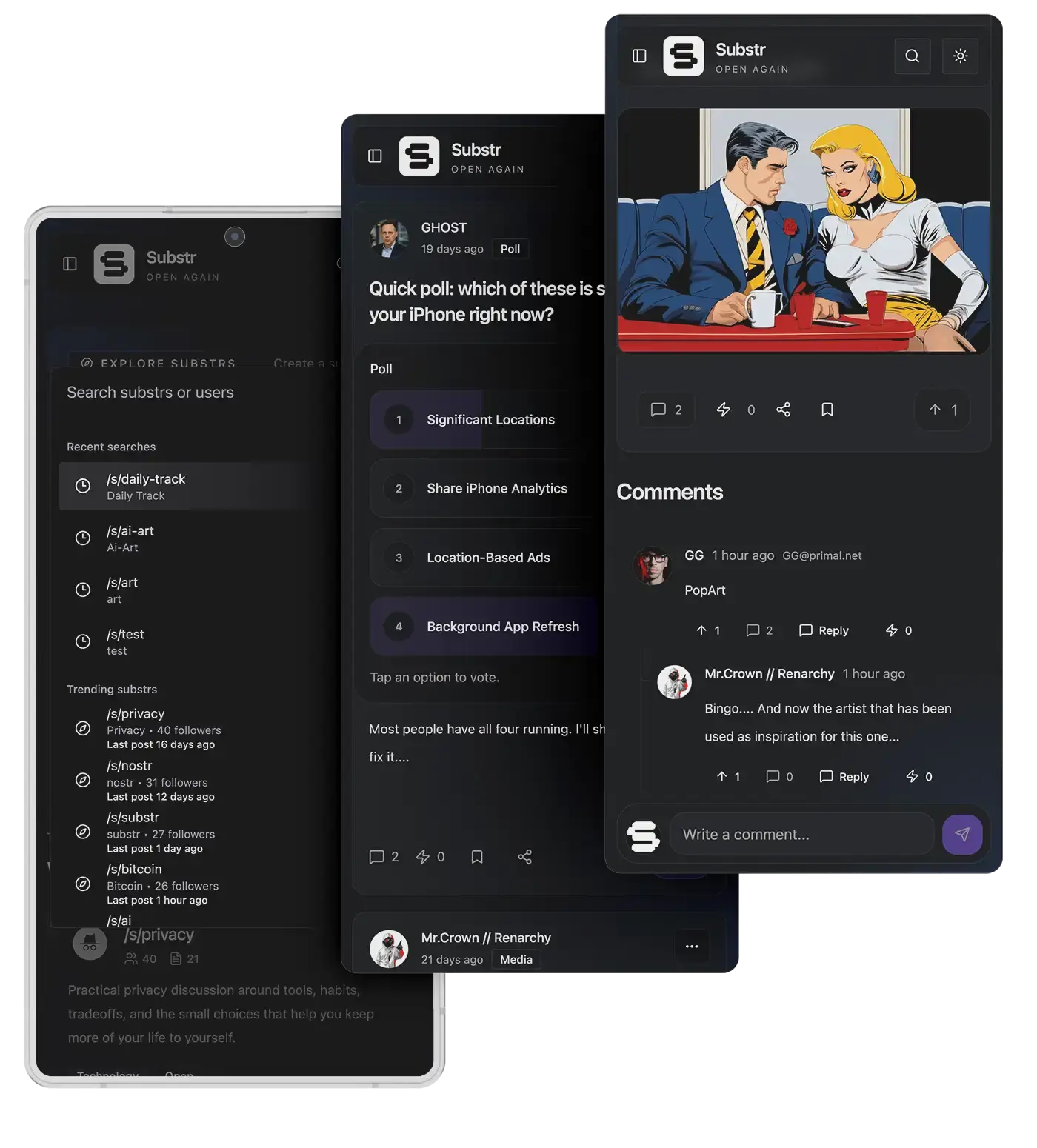
Community spaces with their own context
Conversations already living on Substr
Owners, members, moderators, and posters
2 threads already have replies
A community should feel like a place, not just one more item in a feed.
The internet used to feel more alive when people gathered in smaller corners with their own tone, memory, and regulars. Big social platforms kept the reach but flattened the feeling into one ranking system, one culture, and one moving stream.
Substr is trying to bring back some of that feeling without pretending it is still 2004. The idea is simple: keep identity and content open through Nostr, then build community spaces on top that feel more human, less controlled, and easier to belong to.
It is not about copying old forums exactly. It is about taking what was good about them, real corners and shared context, and making that work on a decentralized internet instead of another closed platform.
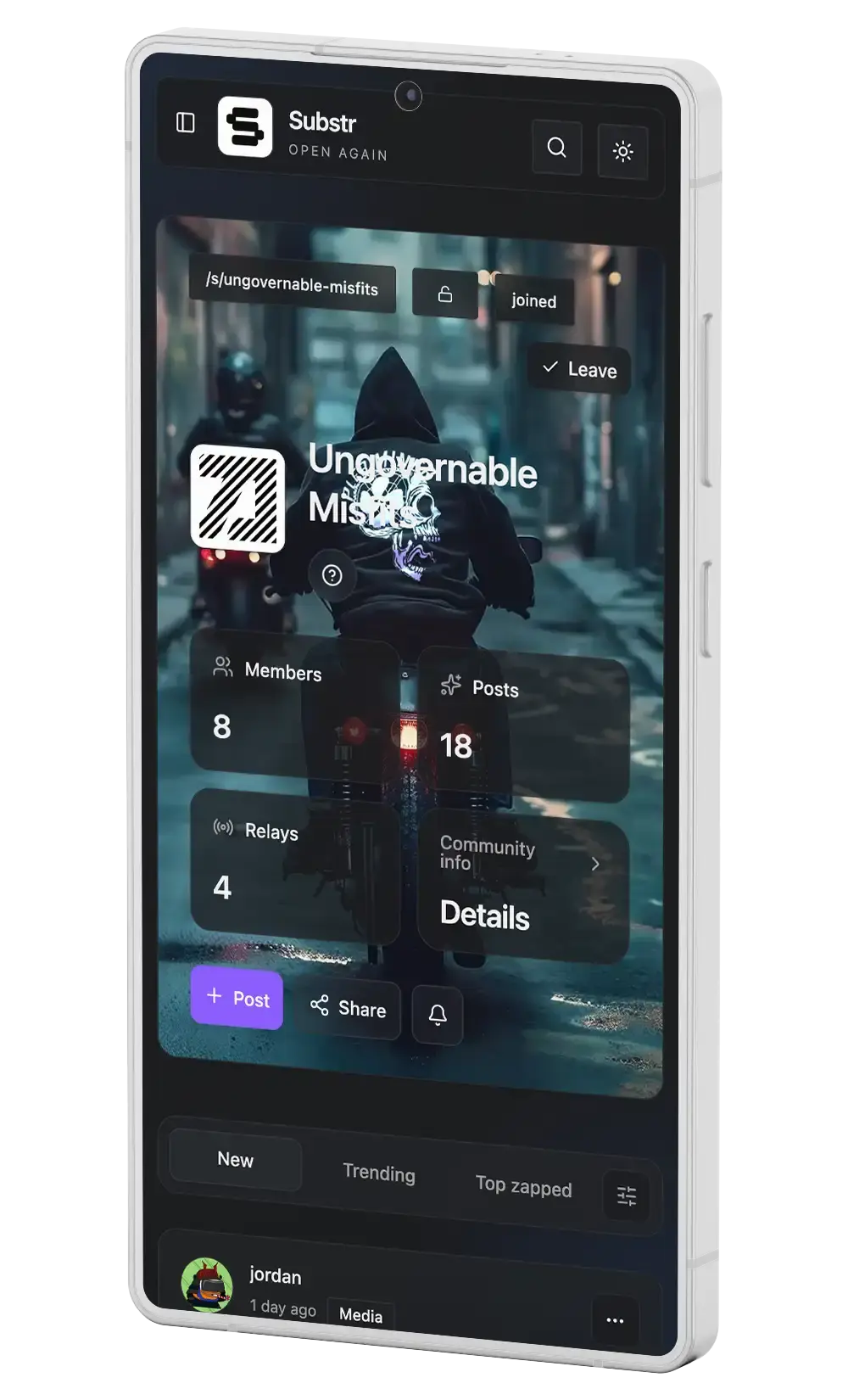
Finding communities and reading posts are now intentionally different experiences.
Explore is where you browse substrs themselves: trending, new, categories, and the overall shape of the network. It is community-first on purpose.
Discover is the cross-substr post feed. It is for the latest conversations happening across the network when you want a wider pulse instead of one place at a time.
That split matters because it makes Substr easier to understand. One route helps you find spaces worth joining. The other helps you follow what people are saying right now.
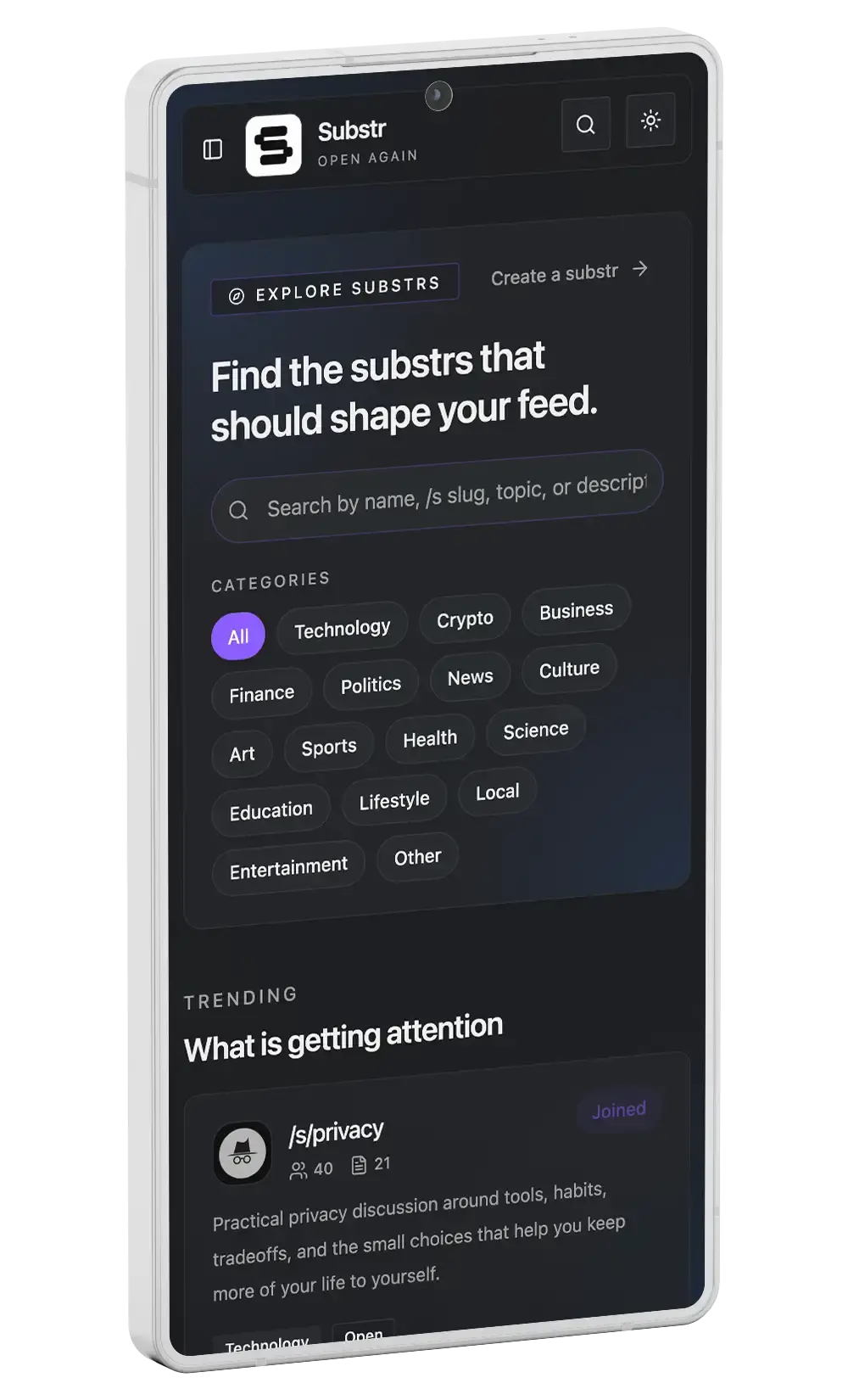
Your personal home should feel intentional, not algorithmically blended.
My Feed is where joined substrs turn into your own stream. Instead of mixing everything together, it gives you the communities you chose and lets that become your home rhythm.
This is why the app now separates Explore, Discover, and My Feed more clearly. Discovery, breadth, and personal relevance each deserve their own mode instead of one overloaded homepage.
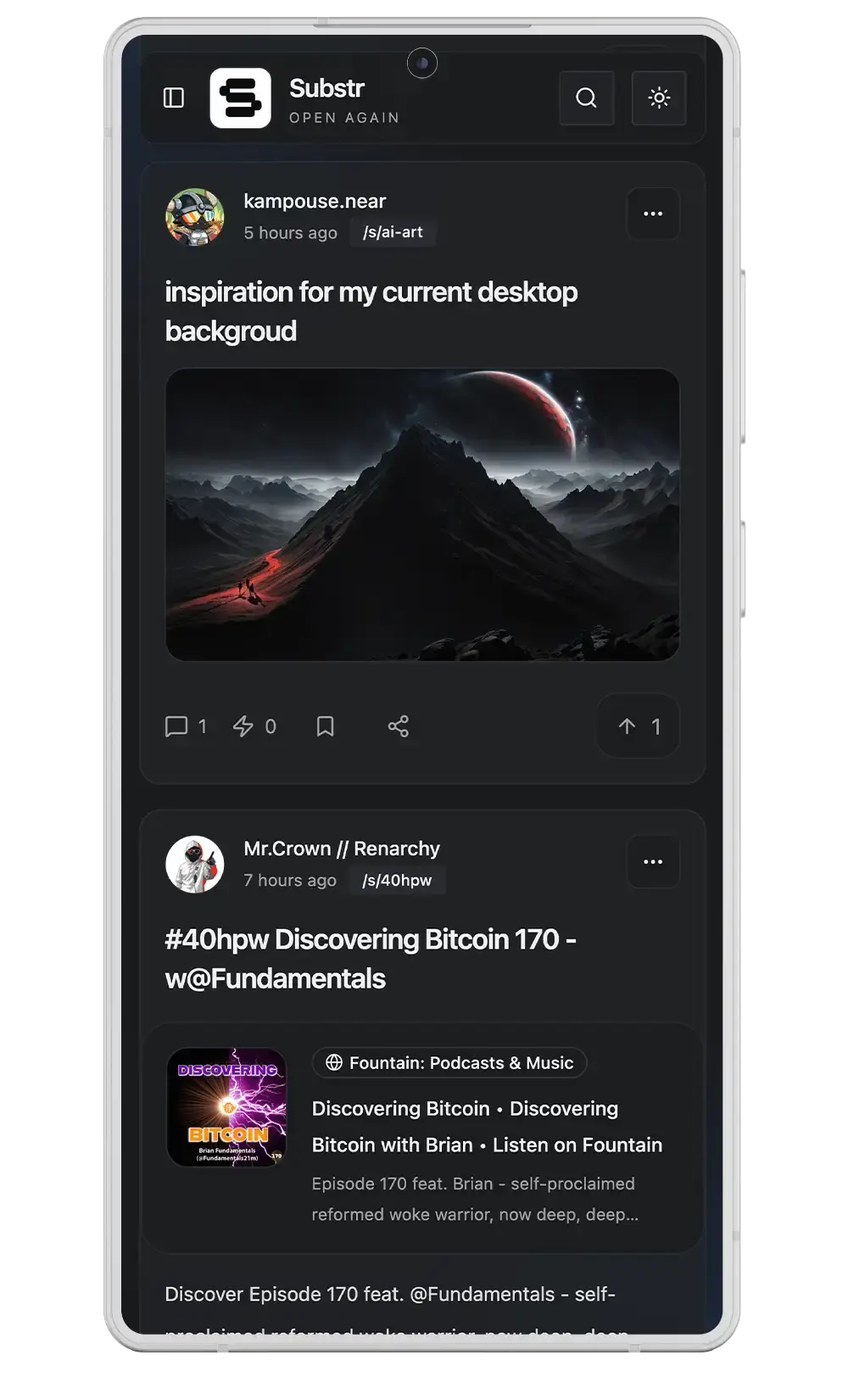
Substr is built for richer community content, not just short notes.
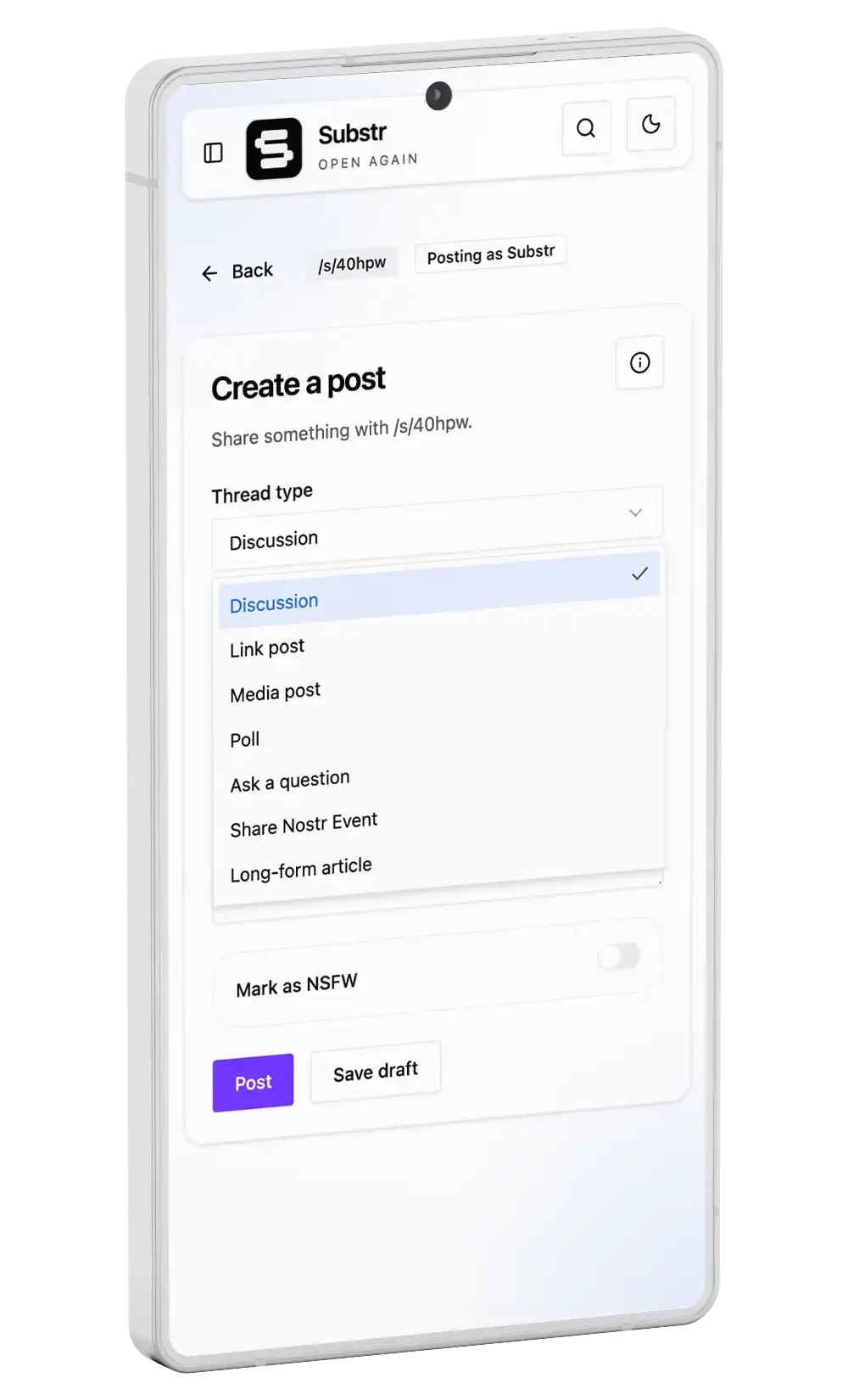
Posting is no longer one flat thread type. Communities can use discussions, links, media, polls, Q&A, shared Nostr events, and long-form publishing through NIP-23.
That matters because different communities need different shapes. A question should not feel like a generic reply chain. A media post should not feel like pasted debris. A long piece should not be squeezed into a short-note box.
Together, those formats push Substr closer to a real community product instead of a feed client with a few labels on top.
Substr is trying to feel native to Nostr instead of bolting Nostr on later.
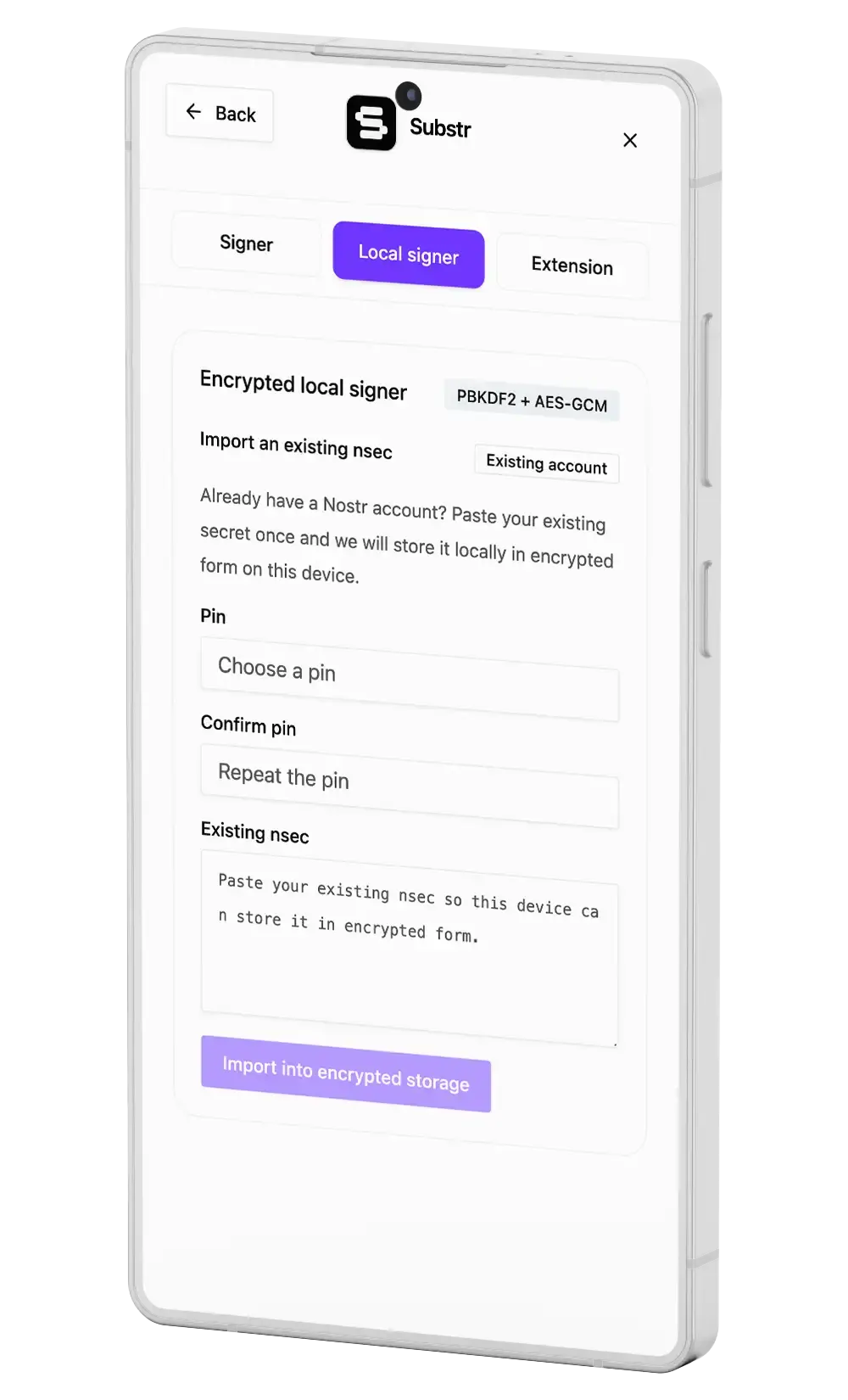
The signer flow supports local accounts and extension-based signing through NIP-07, while signed actions now carry client tags so other clients can see they came from Substr.
Underneath the product, the goal is still open identity, portable content, and compatibility with the wider network. Substr is not trying to hide Nostr. It is trying to make Nostr easier to live inside.
Communities need tools, not just posts.
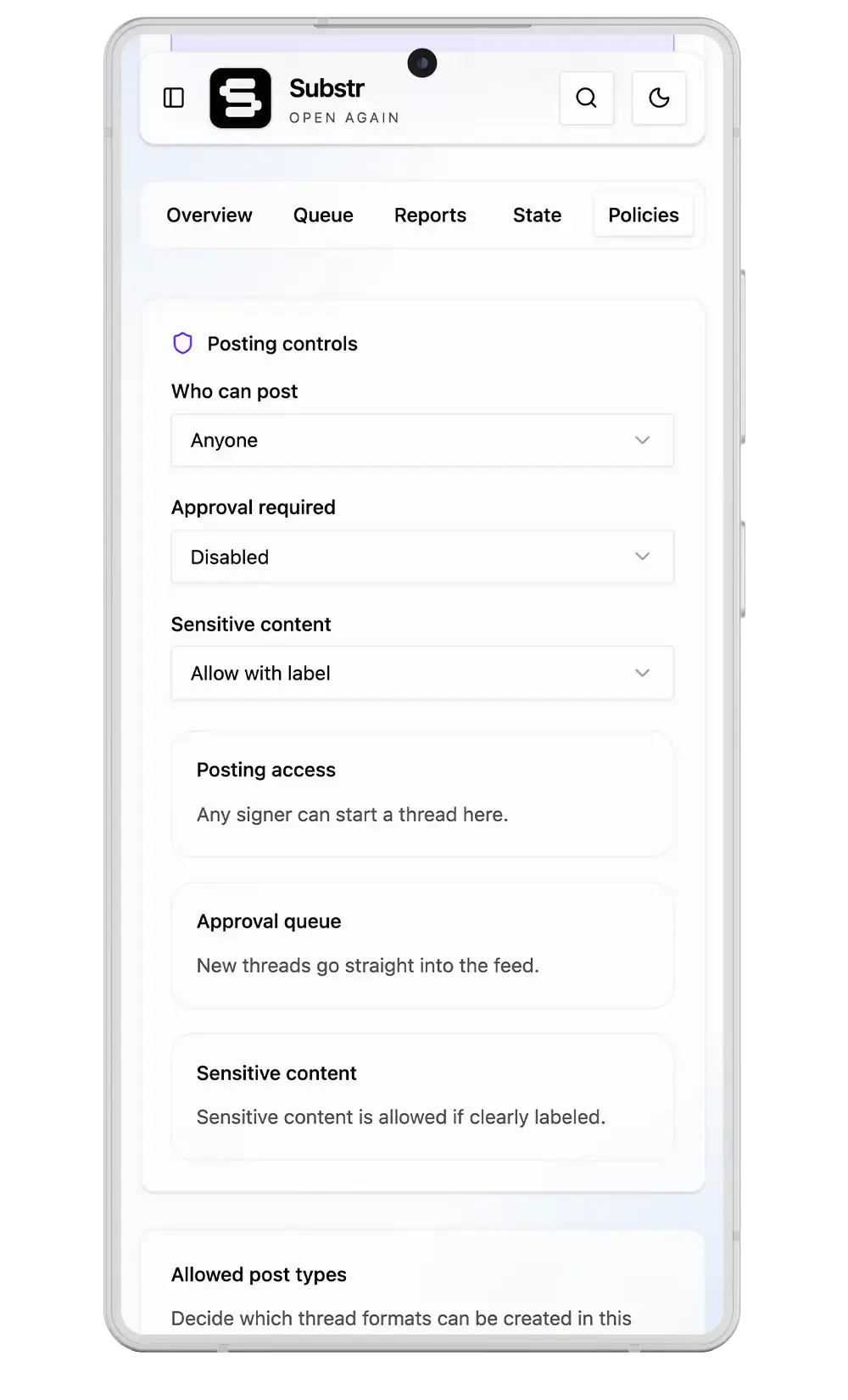
Substrs are meant to be shaped by the people running them. That means posting controls, moderation, roles, sensitive-content rules, member visibility, and room to make a community feel like its own space.
This layer is part of why communities still live on the Substr product layer today instead of being rushed entirely into unfinished group standards. The sequencing is deliberate: good community UX first, deeper protocol mapping when it is mature enough to support it properly.
Why communities still live on the Substr layer
Substr is intentionally community-first, but that does not mean pretending every community standard on Nostr is production-ready for this exact product shape yet. Experiments with NIP-72 and NIP-29 were useful, but the relay support and overall UX still felt too uneven to make them the full foundation today.
The goal is still to move more of that layer toward open standards where it actually fits. The current choice is about sequencing: build something people can use now, keep learning from real community behavior, then map more of it toward the right protocol path from a position of experience instead of hope.
Why the code is not public yet
The direction is still toward openness, but the product, architecture, moderation model, and infrastructure are all still taking shape in real time. Opening the code too early would create support expectations and contributor pressure before the foundation feels ready enough to stand behind.
That is not a rejection of open source. It is a timing decision. The aim is to make more of Substr public from a place of confidence instead of doing it half-formed and turning the product into another maintenance burden before it is stable.
Substr is already moving. This page is just the shape of the why.
The product is being built in public, shipped steadily, and refined week by week. Communities, posting tools, NIP-23 long-form, saved posts, theming, mobile polish, signer flows, and moderation are all already part of the real surface area.
If you want to see the work itself instead of just the pitch, the progress page is where that story keeps getting logged.
Community-first discovery instead of one generic homepage feed.
A wider cross-substr pulse when you want to see what is happening now.
From media and polls to NIP-23 long-form writing.
Posting controls, moderation, and community identity built into the product.